
 César Smet
Yes. A business battery can charge from the electricity grid and supply that stored energy later. Solar panels are not required for that to happen.
Whether it lowers your bill depends on the prices, battery operation and complete offer. Grid charging can move an electricity purchase to a different time; that move needs to create enough value to cover its costs.
Where the electricity comes from
While the battery charges, the grid supplies both your equipment and the energy going into storage. Later, the battery can supply part of the equipment’s demand, reducing what comes from the grid at that moment.
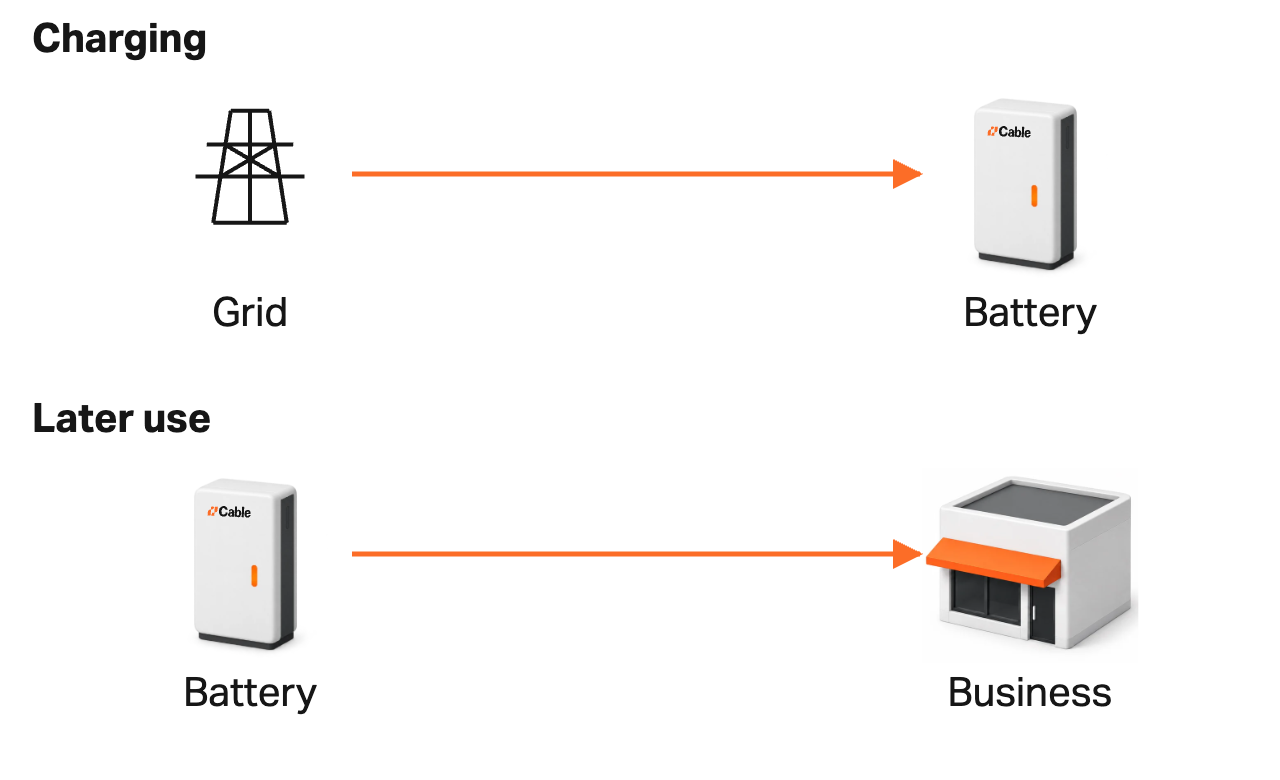
Charging and discharging lose some energy, so the battery takes in more electricity than it later delivers.
When grid charging can lower costs
A business paying different electricity rates at different times may be able to charge at a lower rate and use stored electricity when its tariff is more expensive. The avoided cost must exceed the charging cost after losses, as well as the relevant equipment and operating costs.
Where a demand charge applies, a battery may also reduce the grid draw used to calculate that charge. The proposal needs to account for the tariff’s qualifying periods and other peaks, including any created while charging.
When an operator funds and runs the battery, its supply costs can differ from the price on your bill. It may use the battery to lower those costs and offer you a better agreed price. Your comparison is the complete offer, including what you pay and commit to.
| Arrangement | Where the value must come from |
|---|---|
| You buy and operate a battery | Savings or other payments must cover the battery, installation, charging losses and ongoing costs. |
| An operator funds and runs it | Your benefit depends on the electricity price, payments, responsibilities and commitments in the offer. |
If you buy a battery and keep an unchanged flat usage rate, moving grid purchases between hours does not create a usage-rate saving. The financial case needs other benefits, such as an applicable demand-charge reduction, while accounting for charging losses and ownership costs.
Check the premises as well as the economics
A tenant without access to the roof may still be able to consider a grid-charged battery. The installer needs to assess the electrical connection, proposed location and required access. The landlord or other relevant approver may need to agree to the work.
High installation costs, an unsuitable tenancy or little opportunity to avoid expensive supply can make a proposal poor value. Being able to charge without solar does not establish whether the offer is good value.
Where Cable fits
Cable funds, owns and operates a battery as part of its electricity service. Solar is not required to request an assessment. The current offer includes a 24/7 flat rate, a daily supply charge, a three-year initial term and a separate refundable deposit.
Cable assesses whether operating the battery can support a worthwhile offer for your site. You do not have to reschedule your business around wholesale prices or decide when to charge it.
The next step is to assess your electricity use, premises and complete quote together. The battery-value guide sets out the broader decision.