

Renting your premises does not rule out a battery. Before committing, check who can approve the work, where the battery can go and whether the agreement fits your tenancy.
Start with the time left on your lease
Cable needs confidence that your business will remain at the property for the next three years. Share your lease end date, any renewal options and your plans for the premises so we can assess that with you.
Our term is usually three years. Your quote sets out the agreement and the refundable deposit, including its return conditions and any early-exit charges.
For example, suppose your shop has eighteen months left on its lease and the proposed battery agreement runs for thirty-six months from the same starting point. The agreement reaches eighteen months beyond the confirmed lease.
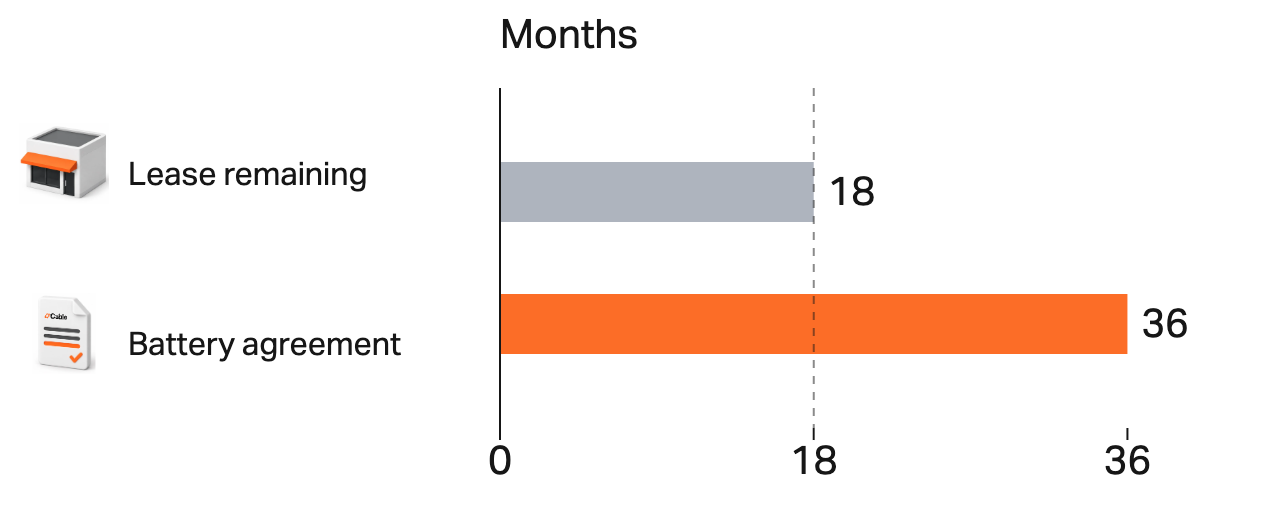
Explain your plans for the period after the lease ends so Cable can assess whether you expect to remain for the full three years. Also establish what happens if those plans change, including a new tenant taking over or battery removal.
Identify everyone who needs to agree
Cable can manage the conversations with your landlord or property manager for you. We are familiar with the usual questions and objections about installing a battery. If a strata committee, centre manager or head office also needs to agree, we can help work through that approval too.
If you pay your landlord or shopping centre for electricity, tell Cable at the start. You may be in an embedded network, where the property buys electricity and supplies individual tenants. We will check whether you can change electricity providers.
Plan installation around your business
We plan the installation with you to find a time that avoids disrupting your business. Tell us about your opening hours and anything that needs to keep running, such as refrigeration or payment systems. We agree the work window and any planned power interruption with you before installation.
Backup during a later grid outage is a separate requirement. Cable’s standard installation does not provide blackout backup.
Know what happens when you leave
Before signing, ask what happens if the next tenant declines the service or cannot qualify. Confirm notice, deposit treatment, any exit or removal charges, and who reinstates the premises. Keep the landlord’s access arrangements consistent with the customer agreement.
If the premises look workable, the next step is a site assessment with your lease dates and approval contacts available. Our battery-value guide explains how to assess the electricity side of the decision.